
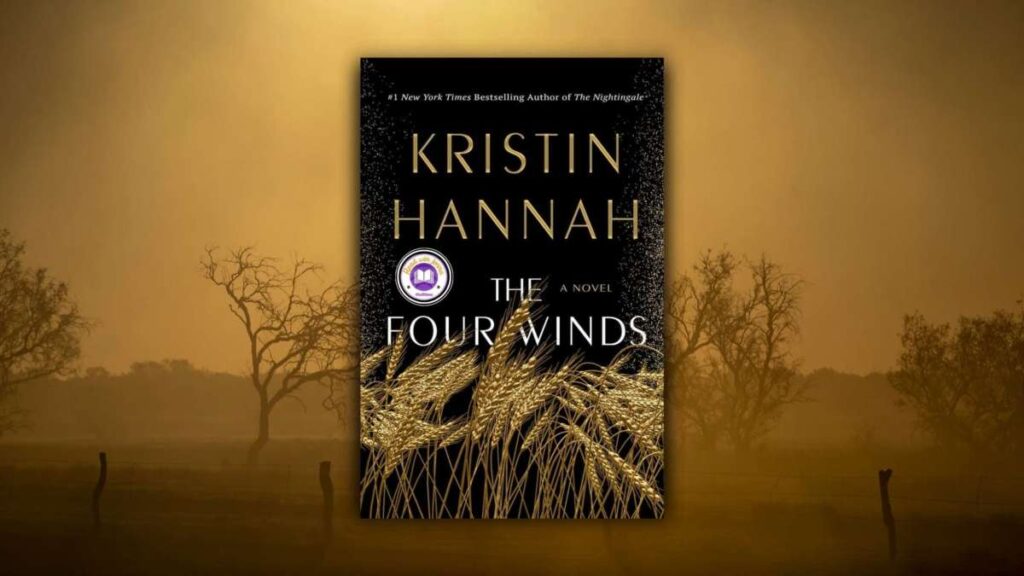
Why Kristin Hannah’s The Four Winds Has Become a Literary Phenomenon
In contemporary literature, only a handful of novels manage to transcend entertainment and become deeply emotional experiences that linger long after the final page. The Four Winds by Kristin Hannah is one such novel. Since its release, it has sparked widespread discussion among readers, critics, and book clubs alike, earning its place as one of the most talked-about historical fiction novels of recent years.
Set against the brutal backdrop of the Great Depression and the Dust Bowl, The Four Winds explores survival, motherhood, sacrifice, and the relentless pursuit of hope. Its relevance feels strikingly modern, despite its historical setting, which is a key reason for its immense popularity.
A Story Rooted in Hardship and Human Strength
At the core of The Four Winds lies a deeply emotional narrative centered on Elsa Martinelli, a woman whose life unfolds amid relentless adversity. Elsa begins her journey as an insecure and overlooked figure, shaped by societal expectations and personal rejection. As the world around her crumbles, she is forced to confront not only environmental disaster but also emotional and moral challenges that test her limits.
Kristin Hannah presents hardship not as a single event but as an ongoing force dust storms, hunger, loss, and displacement all combine to create a suffocating reality. What makes the story powerful is not just the suffering depicted, but the way Elsa continues to move forward despite overwhelming odds. Readers don’t merely observe her struggle; they feel it.
A Vivid Portrait of the Dust Bowl Era
One of the most praised aspects of The Four Winds is its immersive historical realism. Hannah meticulously reconstructs the Dust Bowl years, portraying how environmental collapse reshaped lives across America. The dust storms feel suffocating, the land feels hostile, and the desperation feels real.
Rather than romanticizing history, the novel exposes the brutal consequences of poverty, climate disaster, and failed systems. Readers gain insight into how families survived with little food, no stability, and fading hope. This realism grounds the story, making it both educational and emotionally gripping.
The Power of Resilience in the Face of Despair
Resilience is the emotional backbone of The Four Winds. Elsa’s transformation from a fearful woman into a determined survivor reflects the strength required to endure impossible circumstances. Her journey demonstrates that resilience is not about being fearless, but about continuing even when fear is overwhelming.
The novel emphasizes that hope is often fragile, yet essential. Elsa’s refusal to surrender to the land, to poverty, or to injustice becomes a quiet act of rebellion. This message resonates strongly with modern readers navigating uncertainty, economic challenges, and social upheaval.
Motherhood as a Central Emotional Force
Motherhood plays a profound role in shaping Elsa’s decisions and identity. Her love for her children becomes her greatest source of strength, but also her deepest vulnerability. Hannah portrays motherhood realistically—not as idealized perfection, but as sacrifice, exhaustion, and relentless responsibility.
Elsa’s choices are driven by her desire to protect her children, even when those choices demand painful compromises. This portrayal adds emotional depth to the story and makes Elsa’s struggles universally relatable, especially for readers who understand the weight of parental responsibility.
Complex Characters That Feel Deeply Human
The characters in The Four Winds are layered, flawed, and believable. Elsa’s growth feels earned rather than sudden, unfolding gradually through suffering and self-realization. She is neither heroic nor helpless—she is human.
Supporting characters, including Elsa’s children and the people she encounters during her journey west, add emotional richness to the narrative. Each character represents a different response to hardship: hope, bitterness, resilience, or despair. These varied perspectives make the story emotionally textured and realistic.
Timeless Themes That Mirror Modern Struggles
Although set in the 1930s, The Four Winds addresses issues that remain deeply relevant today. Economic inequality, environmental disaster, labor exploitation, and migration are themes that continue to shape global conversations.
The novel’s depiction of displaced families seeking opportunity mirrors modern refugee crises and internal migrations caused by climate change. This parallel invites readers to reflect on how history repeats itself and what lessons can still be learned from the past.
Kristin Hannah’s Emotionally Charged Writing Style
Kristin Hannah’s writing is both lyrical and accessible, balancing emotional intensity with narrative clarity. She has a rare ability to convey profound sorrow without becoming overwhelming, allowing readers to remain engaged rather than emotionally exhausted.
Her prose is descriptive but purposeful, ensuring that every scene contributes to character development or thematic depth. The emotional weight of the novel builds steadily, resulting in moments that feel earned rather than manipulative.
Why Readers Feel Deeply Connected to Elsa’s Journey
Elsa’s emotional arc is one of self-discovery and empowerment. She begins as someone shaped by others’ expectations and gradually learns to define herself through action and sacrifice. This evolution resonates strongly with readers who have experienced self-doubt or societal limitations.
Her journey reminds readers that strength is often discovered under pressure, not comfort. This emotional truth is what makes Elsa unforgettable and her story deeply personal to many readers.
A Novel That Sparks Meaningful Discussion
The Four Winds has become a staple choice for book clubs due to its layered themes and emotional complexity. It encourages discussions around morality, survival, motherhood, social justice, and personal sacrifice.
Readers often debate Elsa’s decisions, questioning what they might do in similar circumstances. This reflective quality transforms the novel from a passive reading experience into an active emotional and intellectual engagement.
Critical Recognition and Reader Praise
The novel’s widespread acclaim is supported by both critical recognition and reader enthusiasm. Critics have praised its emotional depth, historical accuracy, and character development, while readers frequently describe it as unforgettable and heartbreaking.
Its success on bestseller lists reflects its broad appeal, reaching both historical fiction enthusiasts and readers seeking emotionally driven narratives.
How The Four Winds Stands Out Among Historical Novels
While many historical novels focus on events, The Four Winds prioritizes emotional truth. Rather than centering on politics or major historical figures, it tells history through the lens of ordinary people whose stories are often overlooked.
This approach makes the novel intimate and impactful, allowing readers to connect personally with history rather than viewing it from a distance.
Key Elements That Make The Four Winds So Impactful
| Element | Why It Resonates With Readers |
|---|---|
| Historical realism | Creates an immersive, believable setting |
| Emotional depth | Builds strong reader attachment |
| Resilient protagonist | Inspires empathy and admiration |
| Modern relevance | Reflects ongoing global challenges |
| Strong themes | Encourages reflection and discussion |
Why the Novel Feels Especially Relevant Today
The emotional impact of The Four Winds is amplified by contemporary global challenges. Economic uncertainty, environmental crises, and social inequality make Elsa’s story feel eerily familiar.
Readers often find themselves drawing parallels between the Dust Bowl era and present-day struggles, reinforcing the novel’s message that resilience and compassion remain essential in difficult times.
An Ending That Leaves a Lasting Impression
Without revealing spoilers, the novel’s conclusion reinforces its central themes of sacrifice and hope. Rather than offering easy resolutions, Hannah delivers an ending that feels emotionally honest and thematically consistent.
Readers often finish the book with a mixture of sadness, admiration, and reflection—proof of its lasting emotional power.
Why The Four Winds Is More Than Just a Book
Ultimately, The Four Winds is not just a historical novel—it is a meditation on survival, love, and human endurance. It challenges readers to confront uncomfortable truths while reminding them of the strength people can find in one another.
This emotional depth is why the novel continues to spark conversation and why it holds a permanent place in modern literary discussions.
Conclusion: A Story That Echoes Across Generations
Kristin Hannah’s The Four Winds has earned its status as a modern classic by blending historical authenticity with profound emotional storytelling. Its exploration of resilience, motherhood, and hope speaks to readers across generations and cultures.
By giving voice to those who endured one of America’s darkest chapters, the novel reminds us that courage often emerges in the harshest conditions. That timeless message is why The Four Winds continues to resonate and why it remains a book everyone is talking about.