
introduction
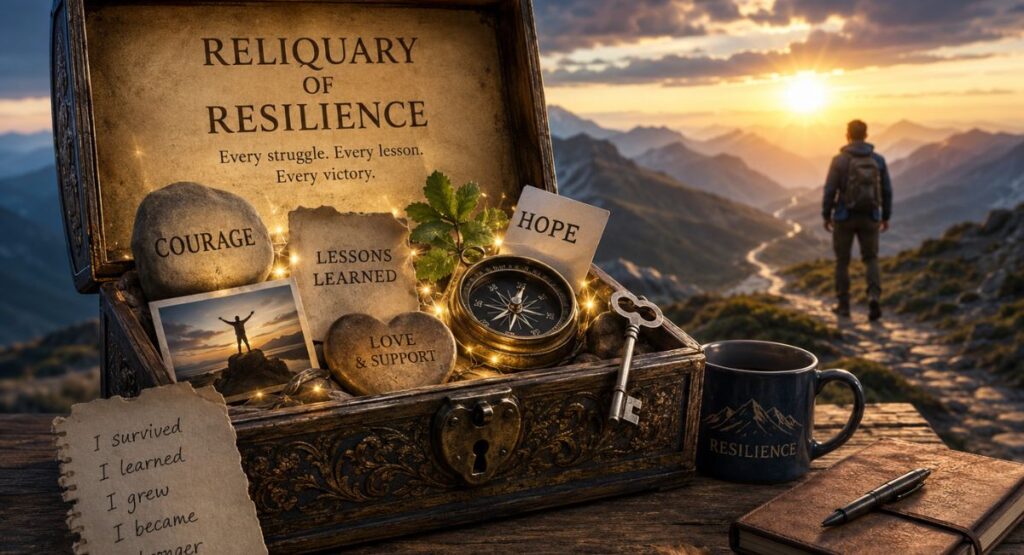
Resilience is one of humanity’s most remarkable qualities. It is the invisible force that enables people to recover from hardship, rebuild after failure, and continue moving forward despite overwhelming obstacles. Throughout history, civilizations have created reliquaries containers designed to preserve sacred relics that hold spiritual, historical, or emotional significance. While traditional reliquaries safeguarded physical objects, the concept can also serve as a powerful metaphor. A “Reliquary of Resilience” symbolizes the collection of experiences, values, memories, and lessons that preserve humanity’s ability to endure adversity.
Every individual carries an internal reliquary filled with moments of courage, acts of kindness, personal victories, and lessons learned through suffering. These invisible treasures shape character and provide strength during difficult times. Unlike material possessions, resilience grows stronger when shared, remembered, and practiced.
This article explores the meaning of a Reliquary of Resilience, its importance in personal growth, its role in communities, and how individuals can cultivate and protect their own inner repository of strength.
Understanding the Meaning of a Reliquary
The word “reliquary” traditionally refers to a sacred container designed to protect valuable relics. Historically, these objects were crafted from precious metals, decorated with gemstones, and treated with immense reverence. They represented continuity, faith, and remembrance across generations.
When applied metaphorically, a reliquary becomes more than a physical object. It transforms into a symbolic space where life’s most meaningful experiences are preserved. A Reliquary of Resilience contains memories of perseverance, hope, compassion, determination, and recovery.
Every challenge faced successfully becomes another treasured relic stored within this symbolic container. Instead of preserving bones, artifacts, or sacred objects, it safeguards emotional wisdom and personal strength.
The Nature of Resilience
Resilience is often misunderstood as the absence of pain or fear. In reality, resilient individuals experience disappointment, grief, uncertainty, and anxiety just like everyone else. Their strength lies in their ability to continue despite these emotions.
Resilience develops through repeated encounters with life’s difficulties. Every obstacle teaches adaptability, patience, and creative problem solving. Rather than avoiding hardship, resilient people learn to navigate it with courage and flexibility.
This quality is not reserved for extraordinary individuals. It exists within children learning from failure, parents overcoming financial hardship, students persevering through academic challenges, entrepreneurs rebuilding after setbacks, and communities recovering from disasters.
Why Every Person Possesses a Reliquary of Resilience
Life naturally creates opportunities for growth. Every person accumulates experiences that become valuable reminders of survival and progress.
These personal relics may include:
- Recovering from illness
- Overcoming rejection
- Surviving loss
- Learning from mistakes
- Building meaningful relationships
- Achieving long-term goals
- Forgiving oneself
- Helping others during difficult times
Although these experiences differ from person to person, each contributes to an individual’s internal archive of resilience.
When future challenges arise, these memories remind people that they have overcome difficulties before. This confidence becomes an essential source of emotional stability.
The Relationship Between Memory and Strength
Memory plays a critical role in resilience. Positive memories do more than evoke nostalgia; they reinforce identity and capability.
Remembering previous successes strengthens confidence during uncertain times. Even recalling moments when others offered support reminds individuals that they are not alone.
Likewise, difficult memories can become sources of wisdom rather than pain when viewed through the lens of growth. Instead of defining failure, they illustrate perseverance.
The Reliquary of Resilience continuously expands as people reinterpret past experiences with greater understanding and maturity.
Building Resilience Through Everyday Challenges
Many believe resilience is forged only through major life events. However, everyday experiences often contribute just as significantly.
Small acts of persistence gradually shape character:
- Completing difficult tasks
- Maintaining healthy habits
- Solving everyday problems
- Learning new skills
- Managing disappointment calmly
- Practicing patience
- Supporting family members
- Adapting to unexpected changes
These seemingly ordinary actions accumulate over time, creating a foundation capable of supporting individuals during larger crises.
The Role of Community in Strengthening Resilience
No reliquary is built entirely alone. Human beings rely on families, friendships, mentors, neighbors, and communities to develop resilience.
Communities preserve collective memories of overcoming adversity. Stories of survival, cooperation, and hope inspire future generations.
Following natural disasters, economic hardships, or periods of conflict, communities often rebuild not only infrastructure but also trust and social bonds. These shared experiences become communal relics that strengthen collective identity.
Support networks provide emotional encouragement, practical assistance, and reassurance that challenges need not be faced in isolation.
Learning from Failure
Failure often becomes one of the most valuable relics within the Reliquary of Resilience.
Although failure initially feels painful, it frequently reveals weaknesses, encourages innovation, and develops humility. Many of history’s greatest achievements emerged after repeated setbacks.
Individuals who embrace failure as a teacher become more willing to take meaningful risks. Rather than fearing mistakes, they recognize them as stepping stones toward mastery.
This mindset transforms disappointment into opportunity.
Hope as a Sacred Relic
Hope occupies a unique place within the Reliquary of Resilience.
Unlike optimism, which expects favorable outcomes, hope persists even when circumstances appear uncertain. Hope believes that meaningful action remains possible despite adversity.
People facing illness, financial hardship, personal loss, or social injustice often survive because hope provides direction. It motivates effort even when success cannot be guaranteed.
Hope is strengthened through purpose, supportive relationships, spiritual beliefs, and small daily victories.
The Importance of Adaptability
Adaptability enables resilience to remain effective in changing environments.
Modern life evolves rapidly through technological innovation, economic transformation, and social change. Individuals who resist all change often experience unnecessary stress.
Adaptable people remain open to learning, adjusting plans, and embracing new opportunities.
Instead of viewing change as a threat, they treat it as an invitation to grow.
The Reliquary of Resilience expands whenever people successfully adapt to unfamiliar situations.
Emotional Intelligence and Resilience
Understanding emotions contributes significantly to resilience.
Emotionally intelligent individuals recognize their feelings without becoming controlled by them. They communicate effectively, empathize with others, and manage conflict constructively.
Rather than suppressing sadness, anger, or fear, resilient individuals acknowledge these emotions while continuing to pursue meaningful goals.
Emotional awareness strengthens relationships and improves decision-making during stressful situations.
The Power of Storytelling
Stories preserve resilience across generations.
Families often recount tales of ancestors overcoming poverty, migration, war, or hardship. Communities celebrate individuals who demonstrated courage during difficult periods.
These narratives become symbolic relics that inspire listeners to persevere through their own challenges.
Storytelling also helps individuals process personal experiences by organizing events into meaningful narratives rather than isolated moments of suffering.
Personal Practices That Build a Reliquary of Resilience
Resilience can be intentionally cultivated through consistent habits.
| Practice | How It Strengthens Resilience |
|---|---|
| Journaling | Encourages reflection and personal growth |
| Gratitude | Shifts focus toward positive experiences |
| Physical exercise | Improves both mental and physical endurance |
| Lifelong learning | Builds adaptability and confidence |
| Meditation or prayer | Develops emotional balance and inner peace |
| Healthy relationships | Provides encouragement and emotional security |
| Goal setting | Creates direction during uncertainty |
| Volunteering | Builds purpose and compassion |
These practices gradually enrich the symbolic reliquary with experiences that reinforce confidence and perseverance.
Resilience in Leadership
Strong leaders rely on resilience to guide others through uncertainty.
Whether leading businesses, schools, families, or communities, resilient leaders remain calm during crises while maintaining hope for the future.
Such leaders acknowledge challenges honestly without allowing fear to dominate decision-making.
They inspire trust through consistency, integrity, empathy, and adaptability.
Their personal Reliquary of Resilience becomes a source of wisdom that benefits everyone around them.
Cultural Expressions of Resilience
Every culture preserves resilience through traditions, ceremonies, literature, music, and art.
Songs commemorate struggles overcome by previous generations.
Festivals celebrate survival and renewal.
Literature explores themes of courage and redemption.
Art transforms suffering into beauty.
These cultural expressions serve as collective reliquaries, reminding societies that hardship has always existed but has never prevented human creativity from flourishing.
Technology and Modern Resilience
Technology presents both opportunities and challenges.
Digital communication enables people to access educational resources, mental health support, emergency information, and global communities.
At the same time, constant connectivity may increase stress, comparison, and information overload.
Developing resilience in the digital age requires balancing technological engagement with meaningful real-world relationships and mindful habits.
Technology should enhance resilience rather than replace authentic human connection.
Protecting the Reliquary
Just as ancient reliquaries required careful preservation, resilience also needs protection.
Negative self-talk, chronic stress, unhealthy relationships, and burnout can gradually weaken emotional strength.
Protecting resilience involves establishing healthy boundaries, seeking support when needed, practicing self-care, and allowing time for recovery after difficult experiences.
Rest should never be mistaken for weakness. Recovery enables resilience to continue growing.
Passing Resilience to Future Generations
One of the greatest responsibilities individuals have is transmitting resilience to younger generations.
Children learn resilience less from instruction than from observation.
When adults demonstrate honesty, perseverance, compassion, accountability, and hope during adversity, young people absorb these values naturally.
Sharing family stories, encouraging problem-solving, allowing children to experience manageable challenges, and celebrating effort rather than perfection all contribute to building resilient future generations.
The symbolic reliquary grows richer each time wisdom is shared rather than withheld.
Conclusion
The Reliquary of Resilience is not an object displayed in a museum or hidden within ancient architecture. It exists within every individual, family, and community. It is filled with memories of courage, lessons learned through hardship, acts of compassion, moments of hope, and victories both large and small.
Every challenge overcome becomes another treasured relic preserved within this invisible collection. These experiences shape character, strengthen confidence, and prepare people for future uncertainties.
In an ever-changing world, resilience remains one of humanity’s greatest resources. It reminds us that setbacks are temporary, growth is continuous, and strength often emerges from the most difficult circumstances.
By protecting our personal reliquaries, supporting one another, embracing lifelong learning, and preserving stories of perseverance, we ensure that resilience continues to inspire generations yet to come. Ultimately, the greatest treasure any person can possess is not a life free from hardship but a heart that has learned to transform adversity into wisdom, hope, and enduring strength.
Frequently Asked Questions (FAQs)
1. What does “Reliquary of Resilience” mean?
It is a metaphor describing the collection of experiences, memories, values, and lessons that preserve a person’s ability to recover from adversity and continue growing.
2. Is resilience something people are born with?
While some personality traits may influence resilience, it is primarily a skill developed through experience, supportive relationships, and intentional habits.
3. How can someone strengthen their resilience?
Regular reflection, healthy relationships, physical well-being, continuous learning, gratitude, and maintaining a sense of purpose all contribute to stronger resilience.
4. Why is community important for resilience?
Communities provide emotional support, shared knowledge, encouragement, and collective problem-solving, making it easier for individuals to overcome challenges.
5. Can difficult experiences become positive sources of strength?
Yes. When people reflect on adversity, learn from it, and apply those lessons in future situations, difficult experiences often become powerful foundations for personal growth and resilience.