
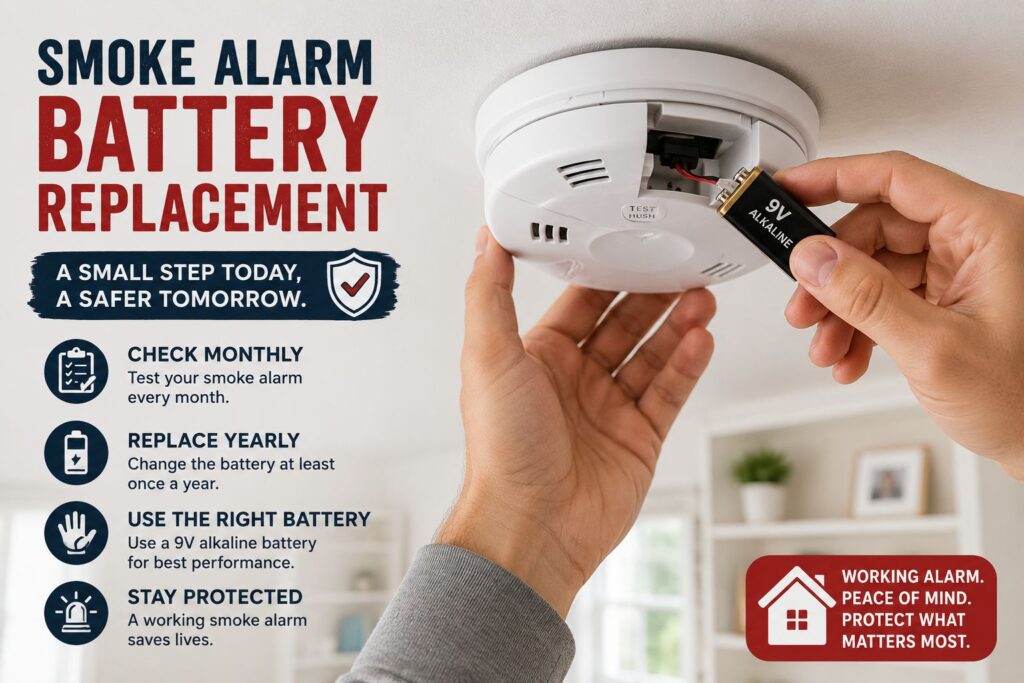
introduction
Smoke alarms are among the most important safety devices in any home. They provide an early warning when smoke or fire is detected, giving occupants valuable time to evacuate and contact emergency services. However, even the most advanced smoke alarm cannot perform its job if its battery is dead or weak. Regular smoke alarm battery replacement is a simple maintenance task that can make a life-saving difference during an emergency.
Many homeowners overlook their smoke alarms until they begin emitting an irritating chirping sound, indicating that the battery is running low. Unfortunately, waiting for this warning is not always the best approach. Replacing smoke alarm batteries on a regular schedule and testing the alarm frequently ensures that the device remains ready to protect your family at all times.
This comprehensive guide explains why smoke alarm battery replacement is essential, how smoke alarms work, when to replace batteries, the different battery types available, common mistakes to avoid, and practical maintenance tips for long-term reliability.
Why Smoke Alarm Batteries Matter
A smoke alarm depends on a reliable power source to detect smoke and sound an alarm during a fire. Whether the alarm operates solely on batteries or is hardwired with a battery backup, the battery plays a crucial role in keeping the device functional during power outages or electrical failures.
Without sufficient battery power, a smoke alarm may fail to detect smoke or produce a warning loud enough to alert occupants. Since fires can spread within minutes, even a short delay in detection can significantly increase the risk of injury or property damage.
Replacing the battery regularly ensures that your smoke alarm remains dependable every day of the year.
How Smoke Alarms Work
Smoke alarms detect the presence of smoke using specialized sensors. Once smoke reaches a certain level, the device activates a loud alarm designed to wake sleeping occupants and encourage immediate evacuation.
There are two primary smoke detection technologies:
- Ionization Smoke Alarms: Better at detecting fast-flaming fires.
- Photoelectric Smoke Alarms: More effective at detecting slow, smoldering fires.
Many modern smoke alarms combine both technologies to provide broader protection against different types of fires.
Regardless of the detection method, every alarm requires consistent electrical power supplied by household wiring, replaceable batteries, or sealed long-life batteries.
Types of Smoke Alarm Power Sources
Understanding the type of smoke alarm installed in your home helps determine how often battery replacement is needed.
| Smoke Alarm Type | Power Source | Battery Replacement |
|---|---|---|
| Battery-operated | Replaceable batteries | Usually every 6–12 months |
| Hardwired with battery backup | Household electricity and backup battery | Replace backup battery annually |
| Sealed 10-year battery alarm | Built-in lithium battery | Replace entire alarm after about 10 years |
| Smart smoke alarm | Rechargeable or sealed battery (varies by model) | Follow the manufacturer’s maintenance schedule |
Always check your smoke alarm’s user manual for the manufacturer’s specific recommendations.
Signs That Your Smoke Alarm Battery Needs Replacement
A smoke alarm often provides warning signs before the battery completely fails.
Common indicators include:
- Repeated chirping every 30–60 seconds.
- Low battery warning light.
- Weak or inconsistent alarm during testing.
- Battery older than one year.
- Device fails the monthly test.
- Battery corrosion or leakage.
- Battery expiration date has passed.
Ignoring these signs can leave your home vulnerable during a fire.
When Should You Replace Smoke Alarm Batteries?
Many fire safety organizations recommend replacing standard smoke alarm batteries at least once every year, even if they appear to be working properly.
A simple way to remember is to choose the same date annually, such as:
- New Year’s Day
- The beginning of spring
- Daylight Saving Time clock changes (where applicable)
- Your home’s annual maintenance day
In addition to annual replacement, batteries should be changed immediately whenever the alarm indicates low battery power.
Choosing the Right Replacement Battery
Not every battery performs equally well in a smoke alarm.
When purchasing replacements, consider:
- Use the exact battery type recommended by the manufacturer.
- Choose high-quality alkaline or lithium batteries from reputable brands.
- Check expiration dates before installation.
- Avoid mixing old and new batteries.
- Never combine different battery brands in the same device.
Using incorrect batteries may reduce performance or damage the smoke alarm.
Step-by-Step Smoke Alarm Battery Replacement
Replacing a smoke alarm battery is usually a straightforward process.
- Place a stable ladder beneath the alarm.
- Twist or slide the alarm from its mounting bracket.
- Open the battery compartment.
- Remove the old battery safely.
- Inspect the compartment for dust or corrosion.
- Insert the new battery according to the positive (+) and negative (-) markings.
- Close the battery compartment securely.
- Reattach the alarm to its mounting bracket.
- Press and hold the test button until the alarm sounds.
- Confirm that the alarm functions properly before leaving the area.
The entire process usually takes only a few minutes.
Testing the Smoke Alarm After Battery Replacement
Installing a new battery does not automatically guarantee proper operation.
Always perform a test immediately after replacing the battery.
Press and hold the test button for several seconds. The alarm should emit a loud, continuous sound. If it does not respond correctly, double-check the battery installation or replace the battery with another new one.
Monthly testing provides additional confidence that the alarm remains operational.
Common Mistakes to Avoid
Even experienced homeowners sometimes make simple errors.
Common mistakes include:
- Ignoring low battery chirping.
- Removing the battery to stop the noise.
- Forgetting to reinstall the battery after replacement.
- Using expired batteries.
- Painting over the smoke alarm.
- Blocking vents with dust or decorations.
- Installing incompatible batteries.
- Failing to test the alarm afterward.
Avoiding these mistakes greatly improves household fire safety.
Cleaning Your Smoke Alarm
Dust, insects, and debris can interfere with proper smoke detection.
Cleaning recommendations include:
- Gently vacuum exterior vents every few months.
- Wipe the housing with a dry or slightly damp cloth.
- Avoid spraying cleaners directly onto the alarm.
- Never open internal electronic components unless instructed by the manufacturer.
Routine cleaning helps maintain reliable sensor performance.
How Long Does a Smoke Alarm Last?
Even if batteries are replaced regularly, smoke alarms eventually wear out.
Most manufacturers recommend replacing the entire smoke alarm approximately every ten years.
Older sensors gradually lose sensitivity and may no longer provide reliable detection.
Check the manufacturing date printed on the back of the alarm. If it is more than ten years old, replacing the entire unit is generally safer than simply installing a new battery.
The Importance of Proper Smoke Alarm Placement
Battery replacement is only part of an effective fire safety plan.
Smoke alarms should be installed:
- Inside every bedroom.
- Outside each sleeping area.
- On every level of the home.
- Near stairways.
- In finished basements.
- According to manufacturer installation instructions.
Avoid installing alarms directly beside kitchens, bathrooms, windows, ceiling fans, or air vents where airflow may interfere with smoke detection.
Creating a Family Fire Safety Plan
Working smoke alarms are most effective when combined with a well-practiced emergency plan.
Every household should:
- Identify at least two escape routes from each room.
- Designate an outdoor meeting location.
- Practice fire drills twice each year.
- Teach children how smoke alarms sound.
- Never re-enter a burning building.
- Contact emergency services after safely exiting.
Preparation helps reduce panic during real emergencies.
Smoke Alarm Maintenance Checklist
Proper maintenance involves more than replacing batteries.
A complete routine includes:
- Test every smoke alarm monthly.
- Replace standard batteries every year.
- Clean alarms several times annually.
- Check for physical damage.
- Replace alarms older than ten years.
- Keep installation instructions for future reference.
- Ensure every family member understands alarm signals.
Following this checklist helps maximize the reliability of your home’s fire detection system.
Benefits of Regular Battery Replacement
Replacing smoke alarm batteries consistently provides several important advantages.
These include:
- Reliable fire detection.
- Protection during electrical outages.
- Reduced risk of alarm failure.
- Improved household safety.
- Greater peace of mind.
- Compliance with many building safety recommendations.
- Longer overall smoke alarm performance.
A few minutes of maintenance each year can provide protection around the clock.
Conclusion
Smoke alarm battery replacement is one of the simplest yet most valuable home maintenance tasks. A functioning smoke alarm serves as the first line of defense against fire, providing precious time to escape and seek help. Replacing batteries regularly, testing alarms monthly, cleaning them periodically, and replacing aging units ensure that your fire safety system remains dependable throughout the year.
Rather than waiting for a low-battery chirp, establish a regular maintenance schedule and include smoke alarm care as part of your annual home safety routine. This small investment of time can significantly improve your family’s protection and provide lasting peace of mind. In matters of fire safety, preparation is always better than reaction, and maintaining your smoke alarms is one of the easiest ways to safeguard both lives and property.
Frequently Asked Questions (FAQs)
1. How often should I replace my smoke alarm battery?
Standard replaceable batteries should generally be changed at least once a year or immediately if the alarm indicates a low battery.
2. How often should I test my smoke alarm?
Test every smoke alarm at least once each month by pressing the test button until the alarm sounds.
3. Do hardwired smoke alarms still need batteries?
Yes. Most hardwired smoke alarms contain a backup battery that keeps the alarm working during power outages and should be replaced according to the manufacturer’s recommendations.
4. Can I use rechargeable batteries in a smoke alarm?
Unless the manufacturer specifically recommends them, it is generally best to use the battery type listed in the user manual.
5. When should I replace the entire smoke alarm?
Most smoke alarms should be replaced approximately every ten years, even if they appear to function properly, because the sensors become less reliable with age.
If you’d like, I can also create an SEO-optimized version of this article with a meta title, meta description, URL slug, and keyword placement for better search engine rankings.