
Introduction
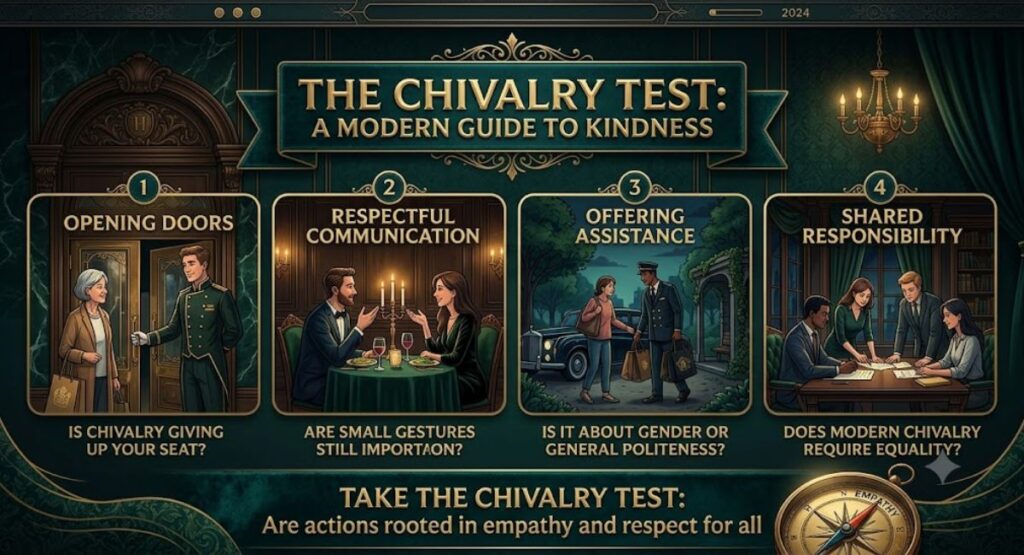
The idea of chivalry has existed for centuries, but its meaning has changed significantly over time. In the past, chivalry referred to the code of conduct followed by medieval knights who valued courage, honor, loyalty, respect, and protection of others. Today, the concept has evolved into everyday actions that reflect kindness, courtesy, empathy, and respect in relationships and social interactions.
A Chivalry Test is designed to evaluate how closely a person’s behavior aligns with these modern values. Rather than judging someone based on outdated gender roles, a chivalry test focuses on qualities such as consideration, honesty, good manners, responsibility, and emotional intelligence. It encourages individuals to reflect on how they treat others and identify areas where they can improve.
Many people take a chivalry test out of curiosity, while others use it as a tool for personal development. The results can provide insight into communication style, respect for boundaries, willingness to help others, and overall character. Although no quiz can completely define a person, it can serve as a useful starting point for self-reflection.
Whether you are interested in improving your relationships, learning more about traditional values, or simply exploring your personality, understanding the purpose and benefits of a chivalry test can help you appreciate the importance of respect and kindness in modern society.
Key Aspects of a Chivalry Test
| Quality | Description |
|---|---|
| Respect | Treating everyone with dignity and kindness. |
| Honesty | Being truthful and trustworthy in every situation. |
| Responsibility | Accepting accountability for your actions and decisions. |
| Compassion | Understanding and caring about the feelings of others. |
| Courtesy | Using polite manners and showing consideration. |
| Patience | Staying calm and respectful during difficult situations. |
| Integrity | Doing the right thing even when no one is watching. |
| Loyalty | Supporting and standing by people you care about. |
What Is a Chivalry Test?
A Chivalry Test is a personality-based assessment that measures behaviors and attitudes associated with courtesy, respect, responsibility, honesty, and compassion. Instead of focusing on appearance or social status, it evaluates how individuals respond to everyday situations.
Questions often cover topics such as:
- Respecting other people’s opinions.
- Helping someone in need.
- Keeping promises.
- Showing patience during disagreements.
- Practicing honesty even when it is difficult.
- Demonstrating good manners in public.
The goal is not to determine whether someone is perfect but to encourage reflection and identify strengths and areas for growth.
History of Chivalry
The word “chivalry” originated during the medieval period. Knights followed a moral code that emphasized bravery, loyalty, faithfulness, generosity, and protection of those who were vulnerable.
While society has changed dramatically since then, many of these values remain relevant today. Modern chivalry is less about formal customs and more about treating everyone with fairness, dignity, and respect regardless of gender, age, or background.
Why People Take a Chivalry Test
People take a Chivalry Test for many different reasons. Some want to evaluate their personality, while others are interested in improving relationships or understanding how their behavior affects those around them.
Common reasons include:
- Personal growth.
- Self-awareness.
- Relationship improvement.
- Better communication skills.
- Leadership development.
- Curiosity and entertainment.
Qualities Measured in a Chivalry Test
| Quality | Description |
| Respect | Treating everyone with dignity and kindness. |
| Honesty | Being truthful and trustworthy. |
| Responsibility | Accepting accountability for actions. |
| Compassion | Understanding and caring about others’ feelings. |
| Courtesy | Displaying good manners in daily life. |
| Patience | Remaining calm during challenging situations. |
| Integrity | Doing the right thing even when nobody is watching. |
| Loyalty | Supporting friends, family, and commitments. |
Signs of a Chivalrous Person
A truly chivalrous individual demonstrates positive character through actions rather than words.
Some common characteristics include:
- Listening carefully when others speak.
- Respecting personal boundaries.
- Helping without expecting rewards.
- Being polite in conversations.
- Showing appreciation and gratitude.
- Accepting responsibility for mistakes.
- Remaining calm during disagreements.
- Treating everyone equally.
These qualities create stronger relationships and contribute to a more respectful community.
Benefits of Taking a Chivalry Test
Taking a Chivalry Test offers several advantages beyond simple entertainment.
It increases self-awareness by helping people recognize positive habits and identify behaviors that may need improvement. It can also encourage healthier communication, greater empathy, stronger friendships, and improved professional relationships.
Many people discover that small acts of kindness, honesty, and respect have a lasting impact on both personal and workplace interactions.
How to Improve Your Chivalry Score
If your results suggest room for improvement, there are many practical ways to become more considerate and respectful.
- Practice active listening.
- Keep your promises.
- Be punctual.
- Show gratitude regularly.
- Respect different opinions.
- Offer help without expecting recognition.
- Apologize sincerely after mistakes.
- Treat everyone fairly.
Improving these habits gradually strengthens your character and relationships.
Common Misconceptions About Chivalry
Many people misunderstand what modern chivalry actually means.
One common misconception is that chivalry only applies to men. In reality, qualities like kindness, honesty, responsibility, and respect are valuable for everyone.
Another misconception is that chivalry is outdated. While some traditional customs have changed, the core values remain highly relevant in today’s society.
Some also believe that being chivalrous means being weak. However, true chivalry often requires confidence, patience, emotional maturity, and integrity.
Conclusion
A Chivalry Test is more than a simple personality quiz. It encourages self-reflection by measuring qualities such as respect, honesty, kindness, responsibility, and compassion. Although no assessment can fully define a person’s character, the results can inspire meaningful personal growth.
Modern chivalry is not about following old traditions blindly. Instead, it focuses on treating others with dignity, practicing empathy, communicating respectfully, and acting with integrity. By developing these qualities, individuals can build healthier relationships, improve their reputation, and create a more positive environment for everyone around them.
FAQs
Q: What is a Chivalry Test?
A: A Chivalry Test is a personality assessment that measures qualities such as respect, kindness, honesty, responsibility, and courtesy.
Q: Is a Chivalry Test accurate?
A: It provides general insights into personality and behavior, but it should not be considered a scientific or definitive evaluation.
Q: Who can take a Chivalry Test?
A: Anyone interested in learning more about their personality, behavior, and interpersonal skills can take a Chivalry Test.
Q: Does chivalry only apply to men?
A: No. Modern chivalry is based on universal values such as respect, empathy, honesty, and kindness that apply to everyone.
Q: Can I improve my Chivalry Test score?
A: Yes. Practicing better communication, honesty, patience, gratitude, and respect for others can improve both your behavior and future test results.
Q: Why is chivalry important today?
A: Chivalry promotes healthy relationships, mutual respect, trust, and positive interactions in both personal and professional life.